Expression Room
Writing prompts, painting prompts, and drawing prompts. Whatever your hands and heart need to do, this room holds space for it. Nothing you create here is wrong.

By Karen Moore
A virtual, interactive journey from the hurt we carry to the beauty we claim.
Built to run all year, not just in February.
Watch the installation trailer
6 women’s stories
24 rooms · about 70 minutes
Cohorts of up to 50 women
Rooted in Brown v. Board of Education
“A delicate yet profound journey.” — Ms. Maxine
The Question
Who Told You Your Black Is Not Beautiful? is a virtual, interactive journey from the hurt we carry to the beauty we claim, exploring the enduring impact of colorism on Black women and girls. Anchored in Brown v. Board of Education and the research of psychologists Mamie and Kenneth Clark, the journey blends personal testimony, archival records, and interactive technology to ask a question that refuses easy answers: Who taught Black women that their beauty needed permission?
The Journey

Meet the Story
“What did her story stir in you?”
Context stop: Glimpse Into Colorism
Identify Your Reflection
“Where have you felt this too?”
Reveal the Impact
“What have you been carrying that belongs to someone else’s story?”
Reclaim Your Narrative
“What does this bring up that you haven’t looked at yet?”
Open to Compassion
“What would you say to her? What would you say to yourself?”
Radiate Forward
“What are you ready to release?”
Arrival → Stories + Mirrors → Expression → Final Mirror → Meditation → Resources → Exit
Writing prompts, painting prompts, and drawing prompts. Whatever your hands and heart need to do, this room holds space for it. Nothing you create here is wrong.
A space to be still with everything you’ve just moved through. Breath. Quiet. No agenda.
The journey ends in Radiate Forward: a final mirror, then a resource room with tools to carry the reflection home. Participants leave restored, not just reminded.
“You came to witness six women’s stories. You may find you leave having finally witnessed your own.”
A live glimpse
Every mirror room is guided by The Witness, an AI docent trained only on this work. It asks the room’s reflection question, listens, and offers one gentle next question. It never interprets the art. The installation doesn’t keep what participants type: their words are used only to write The Witness’s reply.

What participants take away
Language for an experience many have never named.
A private, guided space to reflect, without being put on the spot.
A path from what they were told to what they tell themselves.
After the experience, participants will be able to:
Fits naturally in psychology, Africana and African American studies, women’s and gender studies, education, sociology, art and visual culture, first-year experience, residence life, and counseling and wellness programming.
For your institution
A hosted installation, with participants entering in cohorts, each with a 7-day access window. Participants access the installation directly.
Every partnership includes Karen Live, staff orientation, aftercare resources and impact reporting; Community Circles include a facilitator guide.
The installation doesn’t keep what participants type; their words are used only to shape The Witness’s replies. The installation cannot be recorded or embedded, protecting both the stories and your participants.
Runs in any modern web browser. Nothing to install.
Like a gallery with timed tickets, each cohort of up to 50 women moves through the installation together over a 7-day access window, with room to be quiet, reflect and be guided, never crowded.
Licensing
6-month minimum
For employer ERG and wellness programs, health systems, public health departments, graduate programs, and large nonprofits. Every partnership includes Karen, care for participants, and impact reporting.
$5,000
for 6 months · pay in full, or 2 payments of $2,500
$8,500
for 6 months · pay in full, or 2 payments of $4,250
Legacy — 12-month partnership, $15,000 ($1,250/month). 6 cohorts, Karen Live with every cohort, quarterly and annual impact reports, priority dates, locked renewal rate, and the Sacred Mirror Collection bonus for every participant. Available to Foundation and Signature partners at renewal.
Add-ons: Additional cohort $1,500 · Expand a cohort to 100 women +$1,000
Start a PartnershipPriced per woman
For sorority chapters, church women’s ministries, Black women’s networks and small nonprofits.
$25 per woman
minimum 20 women ($500)
$25 per woman + $1,500
minimum 20 women ($2,000)
$25 per woman + $3,500 + travel
minimum 30 women ($4,250)
A circle of 40 women: Self-Guided $1,000 · Guided $2,500 · The Gathering $4,500 + travel.
Book a CircleFor approval offices
Request our buyer packet: a ready-to-paste program description, learning outcomes, the research background, and the vendor paperwork your office will ask for.
Request the Buyer PacketA 70-minute virtual art installation, grounded in the Clark doll tests cited in Brown v. Board, exploring beauty, self-image and identity through film and reflection.
University & College Licensing
students, faculty, and researchers, including course adoption as required viewing
Cultural Institution Installations
museums, libraries, and arts organizations
Faith-Based & Community Screenings
paired with facilitated dialogue and reflection
Public Health Partnerships
mental health, self-esteem, and well-being
Corporate Engagement
diversity, inclusion, and employee wellness
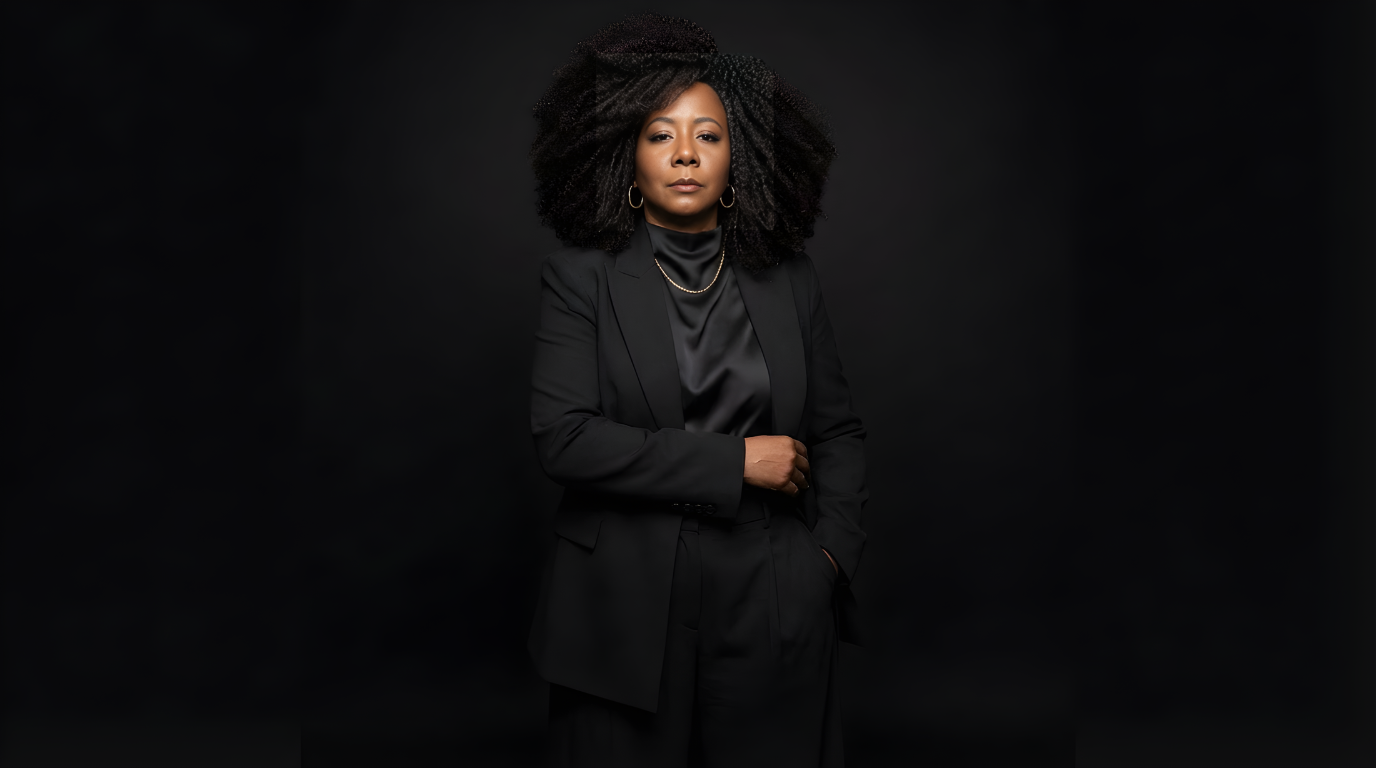
The Filmmaker
Karen Moore is the founder of The Colour of Beautiful Media & Entertainment Group, a film, storytelling, and transformational experience company built on the belief that every Black woman carries a depth of brilliance the world has not yet fully witnessed.
Her short film Blues Born of Fire is a 2026 finalist at the Anchorage International Film Festival.
The foundation
Nearly 75 years after Brown v. Board of Education, the social and psychological impacts of racialized beauty standards persist. As conversations around race and mental health gain renewed urgency, educators, healthcare professionals, researchers, and community leaders increasingly recognize the connection between representation and self-perception.
The research began with Mamie Phipps Clark’s master’s thesis at Howard University. With Kenneth Clark she developed the doll tests, which the U.S. Supreme Court cited in Brown v. Board of Education in 1954.
“I found this installation not only impressive, but extremely necessary for where we are as human beings, let alone as women of colour... a delicate yet profound journey.”
Questions
Begin the conversation
Tell us about your audience and your space, and we’ll shape the experience around them.
Or write to info@thecolourofbeautiful.black